
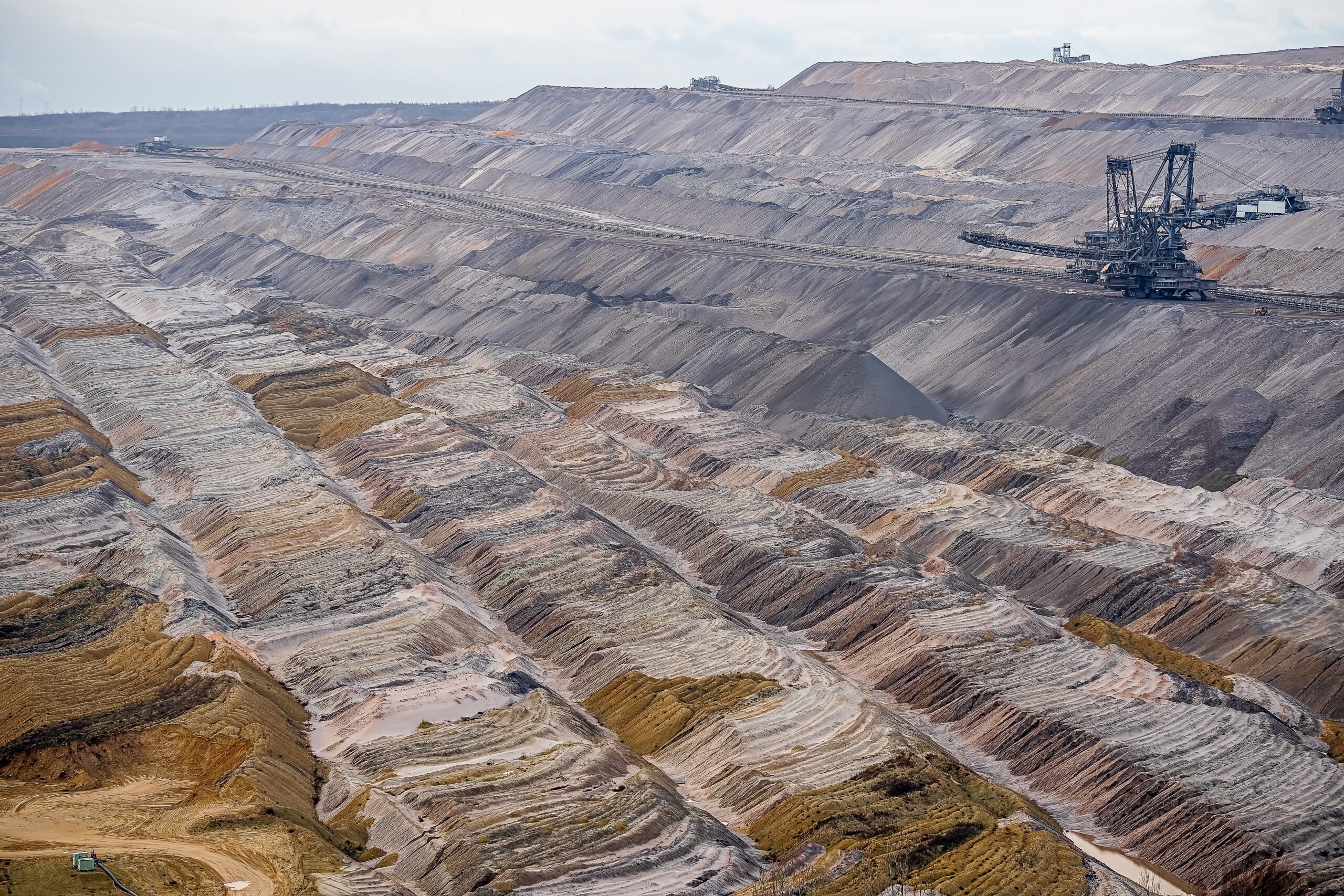

Electric vehicles and other clean energy devices rely on batteries that use a metal called lithium. The expanded use of lithium has made lithium mining a rapidly growing industry. Lithium is most often found in volcanic rocks called pegmatites. Researchers have studied how much carbon and water pegmatite mining uses, but they don’t know how it affects local water quality.
Pegmatite mining releases not only lithium but also other metals commonly found in pegmatite, such as rubidium and cesium. These trace metals are under-researched in terms of their environmental effects and possible human toxicity, though the EPA has linked high levels of lithium to adverse health effects in kidney function, neurological development, and thyroid function. As such, there’s currently no established safe level for lithium in drinking water, but the U.S. Geological Survey suggests a preliminary safety level of 10 micrograms per liter (μg/L).
Researchers at Duke University recently tested how much pegmatite mining increased lithium levels in local waters, and how long those effects lingered after mining processes ended. To do so, they measured metal concentrations in waters downstream from 2 lithium mines and adjacent processing plants. They hypothesized that mining activities would increase interactions between rocks and the surrounding surface water and groundwater, impacting their lithium concentrations.
The researchers collected 99 water samples from surface streams and 93 samples from groundwater wells surrounding the Kings Mountain and Hallman Beam lithium mines, in a zone of about 40 kilometers (25 miles) along the border of South Carolina and North Carolina. The researchers took 51 surface water samples upstream of the mines to evaluate natural metal levels, and compared these with 48 downstream samples showing the mining-impacted metal levels.
The researchers measured lithium and other trace elements, like rubidium, cesium, arsenic, and strontium, in the waters using an instrument called an inductively coupled plasma mass spectrometer. They found that lithium concentrations in the surface waters increased from a background of 0.2 to 79 μg/L to concentrations of 785 to 1,249 μg/L within 10 kilometers (6.2 miles) of the mines and processing facilities. The groundwater lithium levels were as high as 4,500 to 47,000 μg/L in the wells at the mines, but were not affected at downstream wells where lithium levels ranged from 0.5 to 890 μg/L.
They suggested that lithium in the groundwater downstream from the mines came from natural interactions of the pegmatite rocks with the water, rather than from the mines themselves. This natural process was confirmed when the researchers noticed that lithium levels in the groundwater rose after rainfall, which caused more water-rock interaction.
The researchers also measured ions like calcium, sulfate, and chloride in the waters using a tool that can analyze compound molecules, called an ion chromatograph. They found that calcium and sulfate concentrations increased in surface waters within 10 kilometers (6.2 miles) downstream of the processing facilities. These downstream waters had 50 to 120 milligrams per liter (mg/L) of calcium and 100 to 300 mg/L of sulfate, compared to 5 to 20 mg/L of calcium and 3 to 10 mg/L of sulfate in the background surface waters. These ions are also byproducts of pegmatite processing, produced from a waste product made up of calcium sulfate, called gypsum.
The team explained that active mining has been discontinued at this site for approximately 3 decades, meaning that the lithium concentrations they measured reflect the long-term release of lithium from inactive mines and mining waste. Drawing from historical data, they estimated that while the mines were active, they likely released 10 to 30 times the amount of trace metals they measured at the same location today.
The researchers concluded that hard-rock processing impacts downstream metal and ion concentrations more than the mining itself. As lithium mining operations expand, the researchers suggested that future researchers examine lithium toxicity as well as the potential effects of its co-occurring metals, like rubidium and cesium. They also emphasized the need to find solutions for removing the trace metals and dissolved gypsum from water systems, or preventing them from leaking into the water systems to begin with.
