
Skip to content
  • Home
  • About Us
    • Our Mission
    • People
    • Contact
    • Write for Us
  • Topics
    • Agriculture
    • Astrobiology & Space Science
    • Astronomy
    • Biology
    • Chemistry
    • Computer Science
    • Earth Systems
    • Ecology
    • Education
    • Engineering
    • Environment
    • Geology
    • Machine learning and AI
    • Materials Science
    • Medicine
    • Microbiology
    • Neuroscience
    • Oceanography
    • Paleobiology
    • Physics
    • Sustainability
    • Technology
    • Technosignatures
    • The Force
    • Zoology
  • Big Questions
    • How can microbes clean up the environment?
    • How can science help ensure a sustainable future?
    • How could humans travel in space?
    • How do computers learn?
    • How do microbes respond to changes in their surroundings?
    • How does the environment respond to humans?
    • How do scientists study drugs and vaccines?
    • How do we treat infectious diseases?
    • How does the brain work?
    • How do scientists use nanotechnology?
    • How does technology impact our daily lives?
    • How do we educate our kids?
    • How do we feed people now and in the future?
  • Newsletter
  • Take Our Courses
  • Professor Partnership Program
    • About the Program
    • All PPP Articles
    • New Mexico Tech
    • Raritan Valley CC Biology
    • RWU and Tufts Cancer Biology
    • Swarthmore College Micro-Internship
    • Trinity Geology
    • University of Delaware
  • Support Us
Skip to content

Sciworthy

Sciworthy

The Encyclopedia of Science's Frontier

Author: Arda Sems

Vesicles
shadow

How do cells merge?

Posted on April 6, 2026April 2, 2026 by Arda Sems

Researchers imaged previously unseen structures that help cell membranes merge without spilling their contents.
    Read More
    Hands holding soil
    shadow

    Hidden bacteria dominate Earth’s deep soils

    Posted on February 16, 2026February 13, 2026 by Arda Sems

    Scientists showed that an understudied bacterium is widespread in deep soils worldwide and adapted to life with very little energy.
      Read More
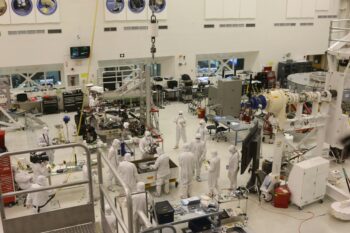
      Assembling the Mars rover at Jet Propulsion Laboratory.
      shadow

      Spacecraft microbes “sleep” to survive sterilization

      Posted on January 5, 2026January 7, 2026 by Arda Sems

      Researchers discovered a bacterium in NASA’s spacecraft assembly facilities that can enter a hibernation state to survive planetary…
        Read More
        Dark green different abstract bubbles texture, from freepik
        shadow

        Artificial cells that reproduce without biology

        Posted on December 4, 2025January 7, 2026 by Arda Sems

        Researchers used simple molecules to create cell-like bubbles that grow and divide on their own, without the need for DNA or enzymes.
          Read More
          shadow

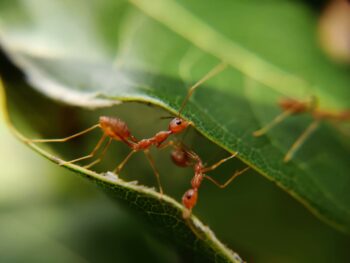
          This ant queen gives birth to a different species

          Posted on November 24, 2025February 23, 2026 by Arda Sems

          Researchers found that the queen of one ant species can produce both her own species and another by cloning the males of the other species…

            Read More
            Youtube Bluesky Facebook Instagram Twitter TikTok

            What’s New in Space Science?

            Artist's impression of the planetary system around the red dwarf Gliese 581. Credit: ESO

            Unlock Your Potential!

            Unlock Your Potential!
            shadow
            shadow
            shadow

            Help us help you!

            We want to know how Sciworthy can better serve our readers. Take our 5-minute survey and tell us your thoughts!

            Take the Survey

            Sciworthy’s content is Creative Commons, No Derivatives, With Attribution. Read more about the license here.