

Schistosoma mansoni is a parasitic worm that infects millions of people worldwide, entering the body through the skin. Unlike bacterial infections that often cause pain and inflammation, S. mansoni usually slips in unnoticed, rarely causing discomfort. Scientists have long wondered why our skin’s defenses don’t react more strongly to this invader.
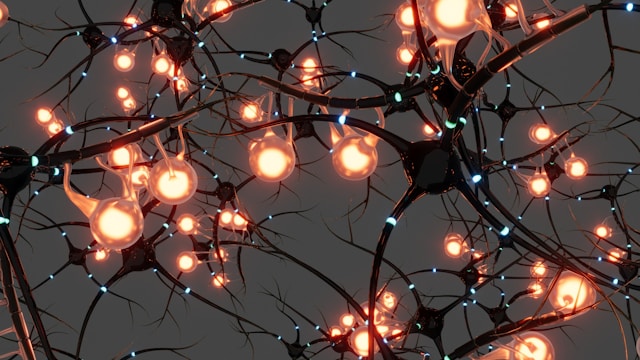
Researchers from the University of Pennsylvania and Tulane University explored whether a specialized group of pain-sensing neurons, called TRPV1+, plays a role in detecting and fighting off S. mansoni during its invasion. TRPV1+ neurons are nerve cells in the skin that respond to heat, spicy foods, and certain bacteria and fungi. When activated, they can trigger pain and release molecules that alert the immune system. Previous researchers have shown that these neurons help defend against bacterial and fungal skin infections, but their role in fighting off parasites was unclear.
To examine how S. mansoni infects its hosts, the team conducted experiments using groups of 4 to 8 mice, matched for age and sex. They repeated each experiment 2 to 3 times to ensure their data was reproducible. They anesthetized the mice, exposed their ears to a solution containing 100 to 150 live S. mansoni larvae, and covered the area with vaseline to keep the solution in place. After 20 to 30 minutes, they counted the number of larvae remaining in the mice’s ears to assess how many had successfully penetrated their skin.
Next, the team measured pain sensitivity in the mice exposed to the parasite by placing them in chambers and applying an infrared heat source to their paws. They recorded how long it took each mouse to withdraw its paw as a sign of pain. They repeated this test 3 times per paw on each mouse, waited at least 5 minutes between each measurement, and calculated an average withdrawal time. They found that mice infected with S. mansoni were approximately half as sensitive to heat-induced pain as an uninfected control group, suggesting that the parasite could be suppressing the mice’s TRPV1+ neurons.
To investigate this further, the team isolated nerve cells that transmit sensory signals from the mice’s skin, known as dorsal root ganglia, and grew them in the lab. They stimulated these neurons by adding a spicy compound in chili peppers, known as capsaicin. Then they measured calcium influx, a sign the neurons were active, using a special dye that glows differently under a microscope depending on calcium levels. This allowed them to see how active the neurons were and how many molecules they released in response to infection and stimulation. They found that 68% of neurons from uninfected mice responded to capsaicin, but only 26% of neurons from infected mice did so, confirming that the parasite dampened their sensory neuron responses.
To test whether restoring the mice’s neuron activity could help their bodies resist parasite invasion, the researchers genetically engineered the mice to produce a light-sensitive protein in their TRPV1+ neurons, called channelrhodopsin. They “turned on” these neurons by stimulating them with blue light for 30 minutes every day for 5 days before infecting the mice with parasites. Six days later, they assessed the mice’s immune response by using a laser to count immune cells in samples of ear tissue. They also determined how far the parasites had spread by counting larvae in lung samples. They saw that mice with the artificially activated TRPV1+ neurons had nearly double the immune response, blocked roughly twice as many larvae at the skin, and had about 20% fewer parasites in their lungs.
Next, the researchers selectively destroyed TRPV1+ neurons in a new set of mice using a compound known as resiniferatoxin. Three weeks later, they confirmed the treatment had worked by testing the mice’s pain sensitivity using the same heat assay as before. After confirming the mice had lost their pain sensitivity, the team exposed the mice to the parasites. They found that the reinfected mice had 1% to 3% weaker skin immune responses and approximately 25% to 30% more parasites in their lungs than a control group, further confirming that TRPV1+ neurons play a protective role during early infection.
The team concluded that S. mansoni has evolved ways to silence pain-sensing neurons, like TRPV1+. Their discovery suggests that future scientists could boost skin immunity against parasites by targeting sensory neurons. For example, they could develop topical creams or therapies that activate these neurons to help our bodies fight off S. mansoni and similar parasitic invaders.
