
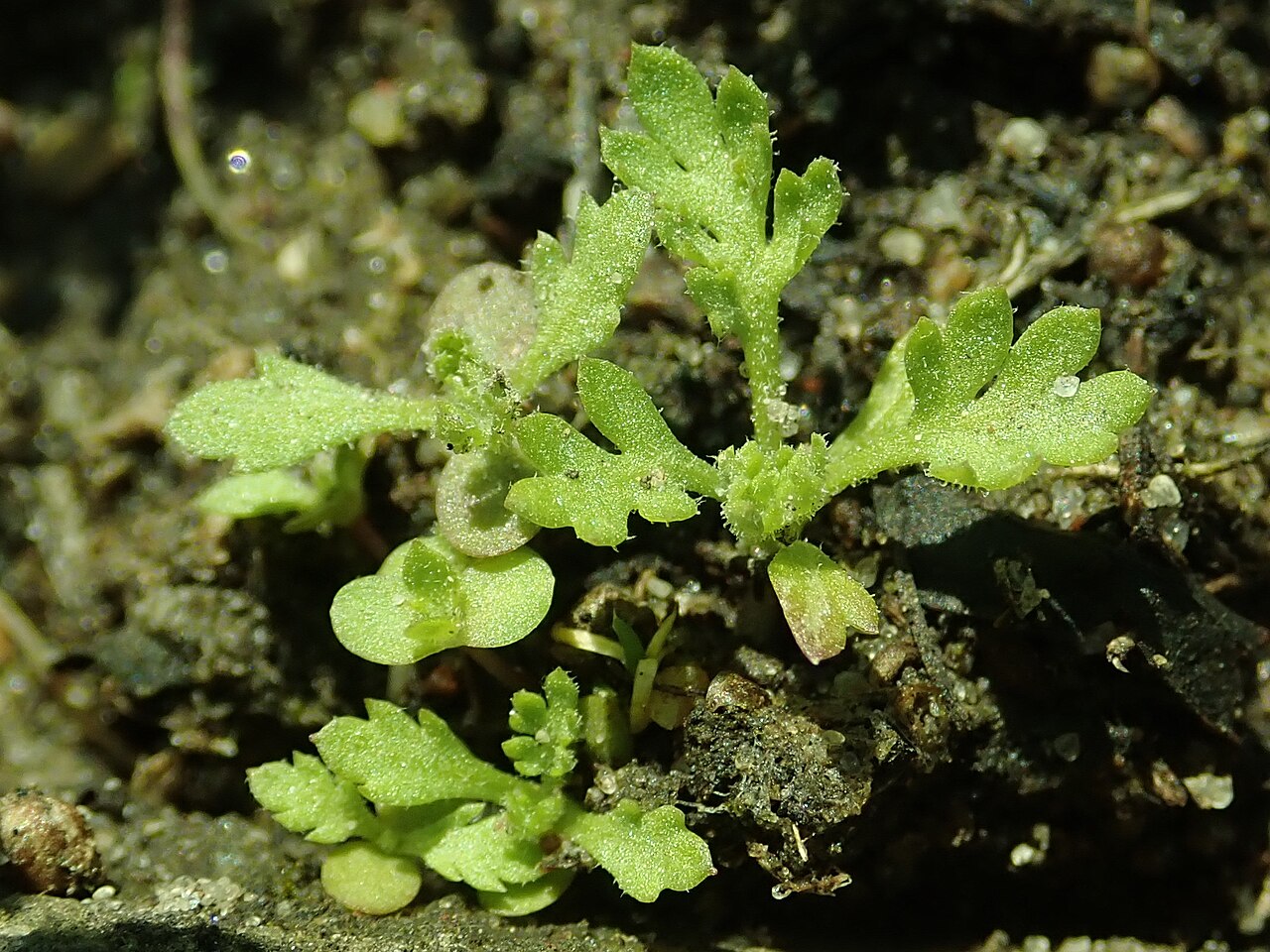

When miners extract valuable minerals from the Earth, they leave behind crushed rock and dirt called mine tailings. Mine tailings contain toxic metals like lead, zinc, and cadmium that damage living organisms. After mining projects end, mine tailings are often left behind where they can disrupt plant growth and other parts of the natural ecosystem.
Plants need soil nutrients like phosphorus to convert sunlight into energy. Even in healthy soils, plants struggle to get phosphorus because it’s stuck inside minerals. Phosphorus that is already dissolved in water and available for plants is called available phosphorus. Toxic metals in mine tailings prevent plants from absorbing available phosphorus by damaging roots, making it hard for plants to grow.
Scientists have determined that microbes living around plant roots, in an area called the rhizosphere, can increase available phosphorus. These microbes use special genes to produce chemicals that dissolve soil minerals, a process known as solubilization. The solubilized phosphorus is released into the soil where plants can readily absorb it through their roots. However, researchers don’t know how these microbes’ phosphorus solubilization genes work in metal-contaminated soils.
To answer this question, a team of scientists from China collected rhizosphere soil from 3 plant species growing at an abandoned mine. They analyzed DNA from the rhizosphere microbes in these soils to identify genes involved in phosphorus cycling and metal resistance. Their overarching goal was to learn whether plant-microbe relationships could be used to clean up metal-contaminated soils.
First, the researchers identified an abandoned mineral mine in northwestern Guizhou Province, China. The mine tailings had lead concentrations around 6,400 milligrams per kilogram (mg/kg), which is more than 30 times higher than the United States Environmental Protection Agency’s safe soil limit of 200 mg/kg lead.
The team collected rhizosphere soil from 3 local shrubs growing in the mine tailings: Artemisia annua, Buddleja davidii, and Carex breviculmis. They also collected soil from the bare ground of the mine tailings as a control to compare with the rhizosphere samples. They collected 8 soil samples from each plant species and 8 control samples, for a total of 32 samples.
The researchers dissolved each soil sample in acid to determine its metal concentration. They used a machine with a high-temperature flame to vaporize the dissolved samples, then counted the metal atoms in the vapor using light, via a method called atomic absorption spectroscopy. They found that the rhizosphere soils all contained about 3,000 to 7,000 mg/kg lead, about 4,000 to 5,000 mg/kg zinc, and about 30 to 60 mg/kg cadmium. The control soil had similar concentrations.
The researchers also measured available phosphorus in the soil samples by mixing them with sodium bicarbonate, also known as baking soda. Baking soda has a high pH that prevents dissolved phosphorus from re-binding to soil minerals. They determined that the A. annua rhizosphere soil had about 7 mg/kg of available phosphorus, while the B. davidii and C. breviculmis rhizosphere soils had about 9 mg/kg and 7 mg/kg, respectively. These phosphorus concentrations were all higher than the control soil concentration of about 6 mg/kg.
Finally, the researchers extracted DNA from the samples and identified the microbes and their genes using a process called DNA sequencing. They found that 65% of the microbial genes for phosphorus solubilization were more abundant in the rhizosphere soils than in the control samples. They also found that soils with more available phosphorus had microbial communities with more phosphorus-related genes.
The team further analyzed a gene for phosphorus solubilization, called gcd, and a gene for toxic metal resistance, called zntA. They observed that these 2 genes were most abundant in the bacterial groups Pseudomonadota and Actinomycetota. They suggested that these microbial groups are likely involved in both phosphorus cycling and metal detoxification in the plants’ rhizosphere.
Overall, the team found that rhizosphere microbes had more genes for phosphorus solubilization and metal resistance than microbes in bare soil. Based on these findings, they concluded that rhizosphere microbes improve soil conditions in contaminated environments, and suggested that growing local plants with these microbes could be a greener way to restore polluted soil. They recommended that future researchers study gene activity in contaminated soils to determine how rhizosphere microbes regulate genes for phosphorus cycling in these environments.

