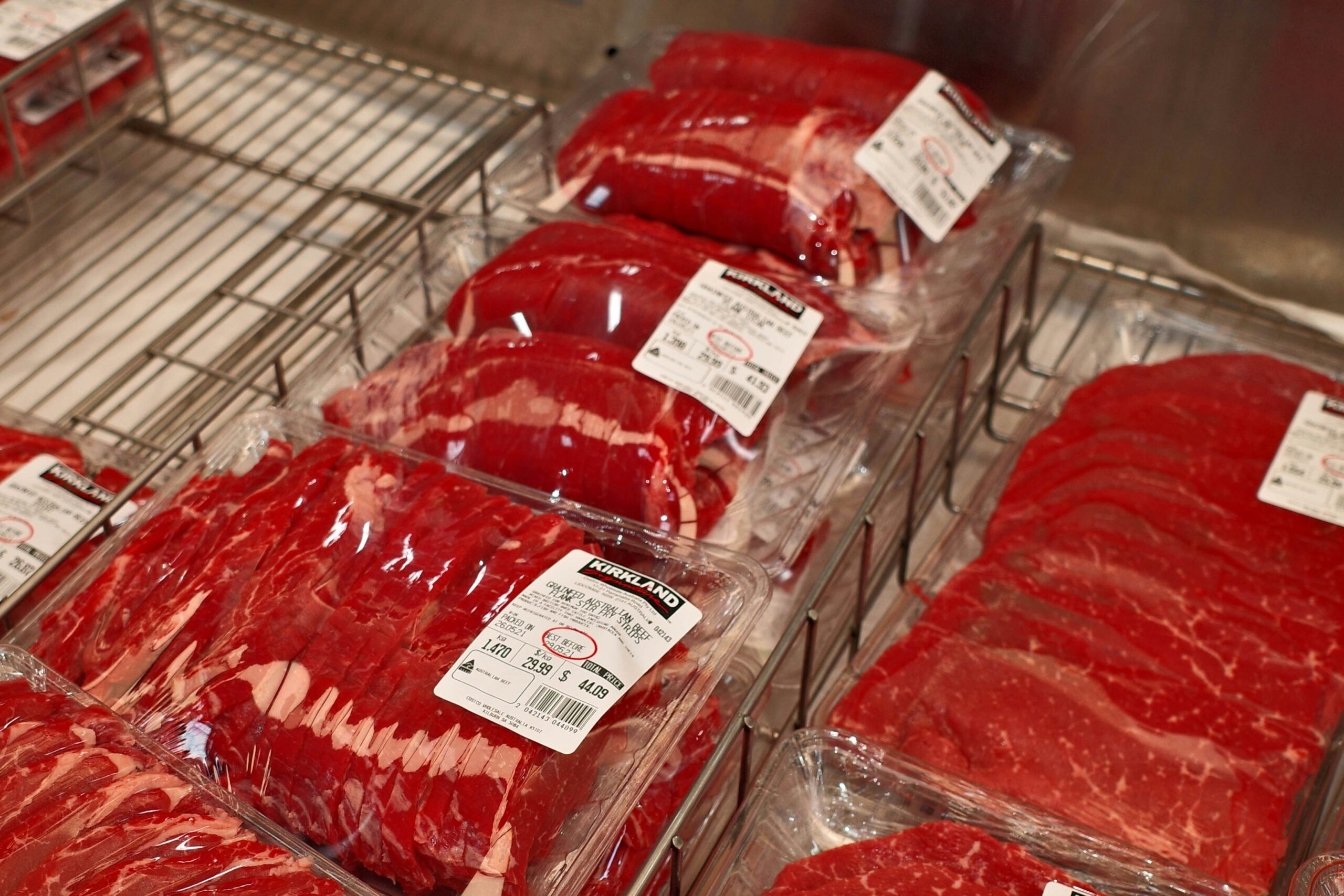

Meat spoilage is not always obvious. A piece of meat can look fresh and firm inside a sealed package, yet still harbor microorganisms that make it unsafe to eat. Each year, foodborne illnesses affect millions worldwide, with over 200 diseases linked to unsafe food consumption.
People often recognize spoiled meat through a characteristic rotting odor caused by chemical compounds called biogenic amines or BAs. Food quality inspectors quantify these compounds using procedures that involve direct meat sampling and time-consuming laboratory analysis. However, once meat is sealed and distributed for commercial retail, such testing becomes impractical, making spoilage difficult to detect.
Researchers at the Institute of Food Science and Technology in China addressed this challenge by developing a visual method to detect spoilage inside sealed food packages. They used tiny carbon-based materials called carbon dots, which are thousands of times smaller than the width of a human hair. Because of their nanoscale size, carbon dots have a special ability to absorb ultraviolet light and re-emit it as visible fluorescence, with the emitted color depending on the surrounding chemical environment. However, most carbon dots emit blue-green light, which can be easily obscured by natural lighting. As such, scientists are looking into ways to shift carbon dot fluorescence toward more easily distinguishable red hues.
The team from China synthesized their carbon dots by using ethanol to dissolve citric acid and a nitrogen-rich chemical known to promote red fluorescence, called o-phenyldiamine or OPD. After heating the mixture at 220°C (428°F) for 6 hours, they purified the carbon dot solutions using a centrifuge and a filter. The researchers then incorporated different chemical elements to further tune the carbon dots’ fluorescence. Specifically, they prepared different carbon dots using OPD variants containing fluorine, chlorine, bromine, and iodine.
To test how sensitive their spoilage detection was, the researchers added up to 50 milligrams per liter (mg/L) of BA to each carbon dot solution. After 5 minutes of mixing, they observed varying degrees of fluorescence color changes, with the chlorine variant showing the most distinct shift from orange-red to yellow. They attributed this behavior to BAs interacting with the chlorinated carbon dots, altering their natural surface properties and triggering the color change. As a result, they selected the chlorinated carbon dots as the optimal indicator for visual BA detection. The team then fabricated biosensors by soaking filter paper in a 5 mg/mL chlorinated carbon dot solution for 30 minutes and drying it at 37°C (99°F) for 15 minutes.
To evaluate how well their biosensors performed in the real world, the researchers placed pork, beef, and mutton in different plastic trays. They attached the biosensors to the underside of the tray lids, sealed the trays, and stored them at 25°C (77°F) under ultraviolet light. As a negative control, they also prepared an identical sealed tray containing only a wet sponge and the biosensor, but no meat. They observed that the biosensors in the pork and mutton trays turned bright yellow after 24 hours, while the one in the beef tray took 36 hours. In contrast, the control biosensor showed no detectable change.
Next, the team developed a smartphone-based color analyzer app that can process images of the biosensor and report color values. The app calculates numerical ratios between red, green, and blue color components, enabling objective and reproducible evaluation of spoilage-related color changes. Taking it a step further, the researchers then compared these values with a globally recognized meat spoilage index called Total Volatile Basic Nitrogen or TVB-N. This index detects the nitrogen groups present in BAs through a series of laboratory tests to quantify meat freshness. The researchers observed a strong linear correlation between the TVB-N values and their data, indicating that the biosensor’s color change reliably reflects established spoilage metrics.
In conclusion, the researchers developed a simple yet effective process to produce color-shifting carbon dots that function as visual spoilage sensors. When integrated into food packaging, these sensors enable contactless and real-time assessment of meat freshness using only ultraviolet light and a smartphone. They suggested that such technologies could ultimately help reduce food safety risks, improve supply chain management, and decrease food waste.
